Cutting Through the Fog: How Operational Fog Drives Execution Drift
What I've Seen of Operational Fog
Operational fog isn't confusion or chaos. It's a gradual haze that accumulates when tensions remain unresolved, decisions are deferred, and assumptions misalign. Activity stays high — meetings held, initiatives launched, reports circulated. Underneath, key questions go unanswered. Accountability blurs. Strategic intent dissipates.
The fog rarely announces itself. It thickens slowly, dismissed as growing pains or ordinary friction. By the time anyone names the pattern, inertia has taken hold. Teams adapt by working around ambiguity.
Recognition
Recognition tends to lag. The fog is most persistent when no one names it. What can't be acknowledged remains unaddressed. Familiarity with the patterns comes from seeing them recur, not from any checklist or measurement.
Signals That Surface
Certain signals repeat across different organizations and situations. These are not theoretical. They show up in practice.
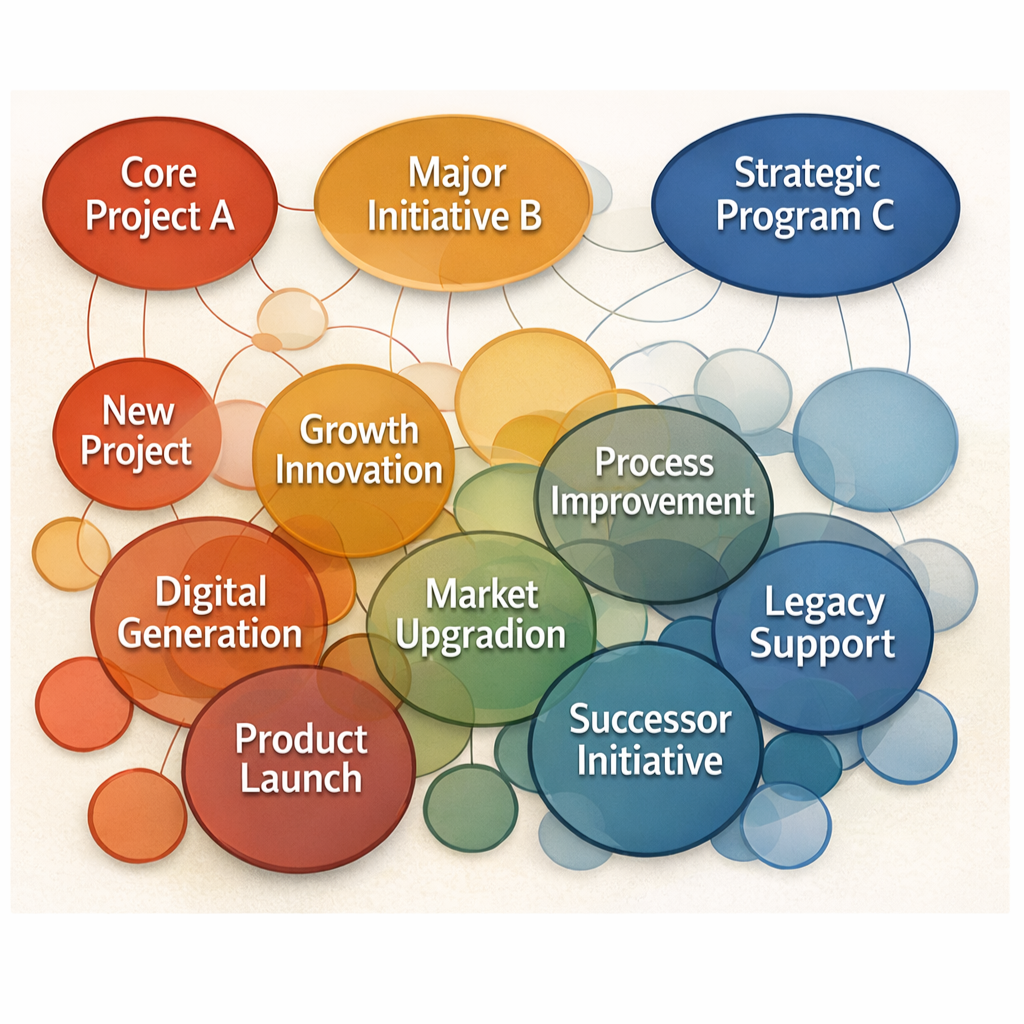
What a priority proliferation map looks like.
1. Strategic Priorities Multiply Faster Than They Resolve
New initiatives are layered onto existing commitments. Older projects rarely get retired. The portfolio of "strategic" efforts expands. Each is important in name, but none are fully resourced to completion.
2. Accountability Appears Defined, but Dissolves Under Pressure
Ownership exists on paper. When execution stalls, decision authority diffuses. No single leader is positioned to act decisively. Progress slows.
3. Cross-Functional Alignment Requires Constant Renegotiation
Teams interpret shared objectives differently. Agreements reached in one meeting are revisited in the next. Momentum slows. Trust erodes.
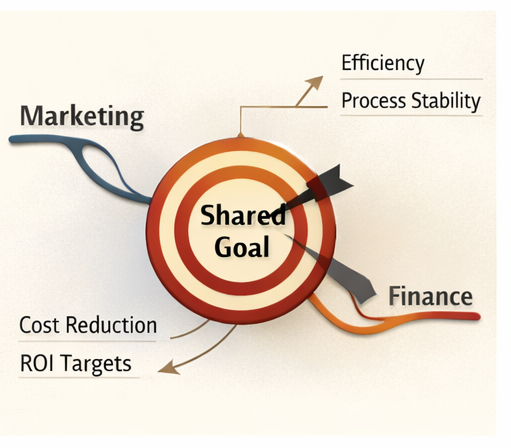
What functional alignment looks like.
4. Resources Follow Strategy in Planning, but Not in Execution
Budgets reflect stated priorities. Discretionary time, attention, and political capital flow elsewhere. Leadership focus drifts toward legacy operations or immediate pressures.
5. Performance Metrics Explain Outcomes, but Don't Change Behavior
Dashboards are reviewed. Underperformance triggers justification rather than correction. The organization contextualizes results instead of addressing root causes.
6. Decision Rights Exist on Paper, but Not Operationally
Governance frameworks are documented. Decisions are delayed, waiting for input from advisory stakeholders. Informal influence outweighs formal authority. As strategic importance increases, speed of execution declines.
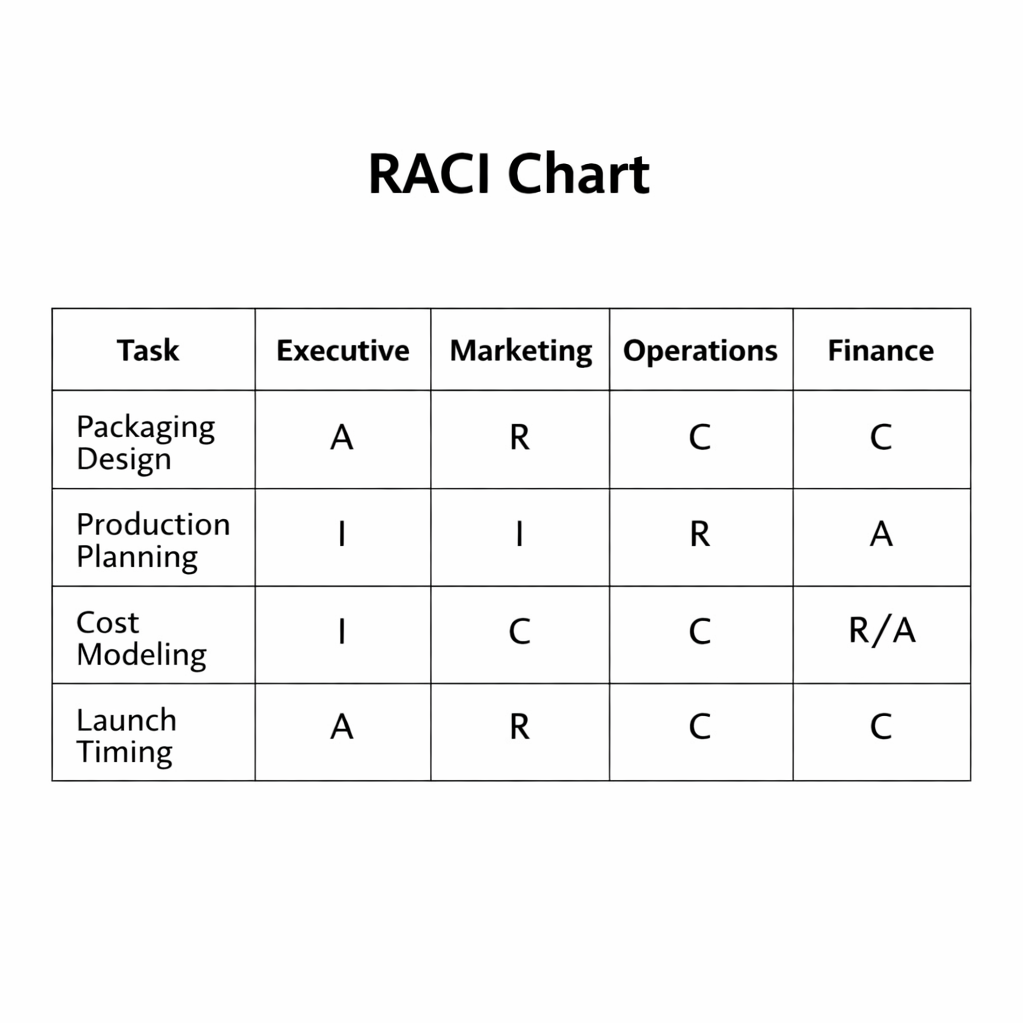
RACI Chart: Responsible, Accountable, Consulted, Informed
When the Fog Drives Drift
When several of these signals are present at once, the operational fog is already thick. Activity continues, but execution loses its bearing. Teams stay busy while drifting further from strategic intent. This is execution drift — not a failure of effort, but a loss of directional integrity caused by an operating environment that has gone unclear.
Boards often sense something is off before they can articulate it. That instinct is worth trusting. The fog is most persistent precisely when no one has named it yet.
What cuts through it isn't a new framework or a restructured org chart. It requires someone willing to name what everyone else has learned to work around.