Seats on the Bus | The Post-Close Reckoning
What no one tells you about the org chart sitting on your desk.
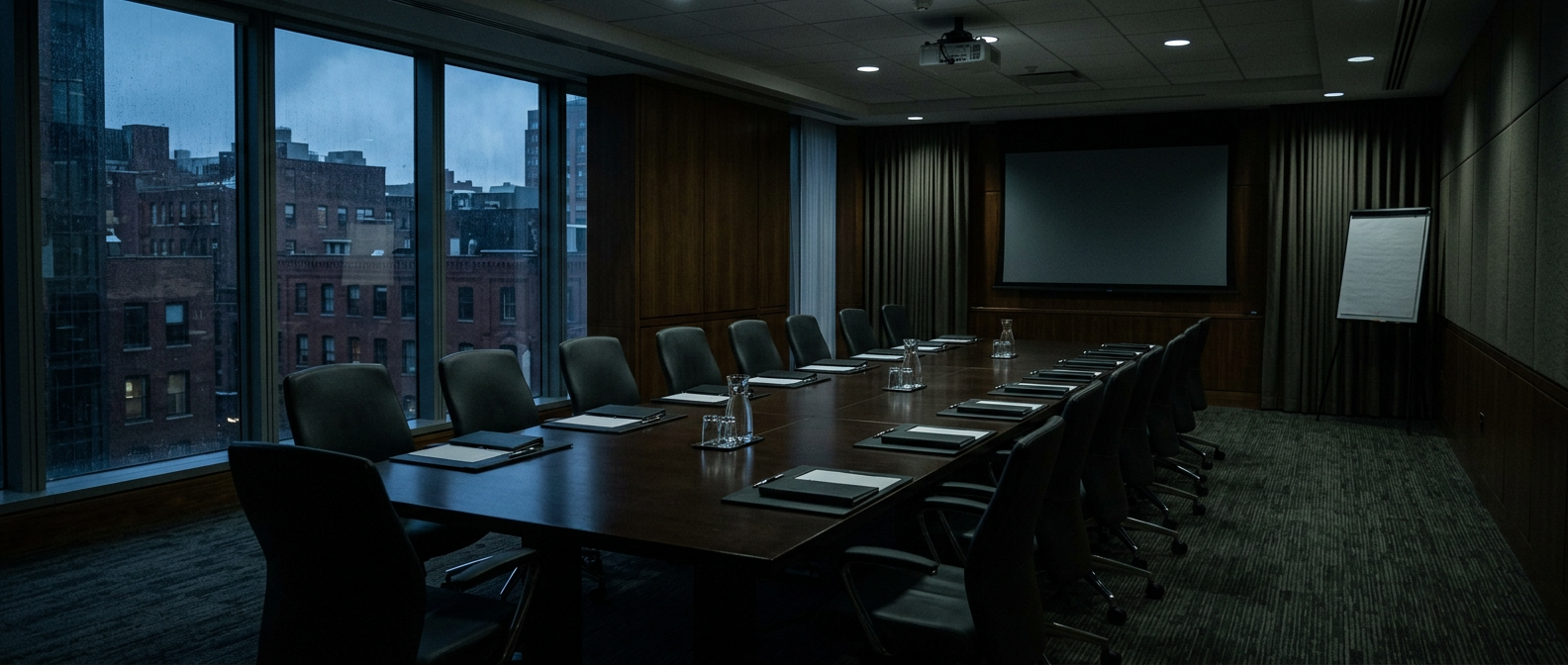
There is a moment, usually somewhere in the first weeks after a deal closes, when you find yourself sitting across from a list.
The list exists because people decisions were made during diligence. Names were assessed, roles were evaluated, conclusions were drawn about who fits the next chapter and who does not. That work happened before you ever saw anyone operate. Before the pressure was real. Before the stakes were on the table.
Now the deal is closed. And you are about to find out how much of what you decided was right.
I have sat at that table many times. After over a decade of doing this work, I can tell you what all of that preparation cannot tell you: how someone actually calls it when the game is live and getting it wrong has consequences.
Part One: The Thesis Looks Clean on Paper
There are two versions of this story, and they look different on the surface.
In one version, PE capital comes in to scale a healthy business. The founder built something real and now needs the infrastructure, the systems, and the leadership depth to reach the next level. Nobody is redundant. The question is who can grow into a bigger role and who has already hit their ceiling.
In the other version, two companies are being combined. The cost structure has to collapse. Some roles will disappear because the math requires it. The people decisions are harder and the timeline is compressed.
The surface looks different. The underlying problem is identical. In both cases, you made judgments about people before you understood how they actually operate under pressure. And in both cases, you will spend the first 60 days post-close finding out what those judgments got right and what they missed.
The due diligence process is genuinely useful. It identifies the obvious problems, the structural gaps, the people who clearly should not be in the roles they are in. You learn a great deal from months of careful observation.
What you are doing, whether you frame it this way or not, is watching batting practice.
You can study the swing for months. But there is a category of knowledge that due diligence cannot reach, no matter how thorough it is. You do not know who holds the keys to the undocumented processes. The institutional knowledge that never made it into a procedure manual because the person who built it never imagined they would leave. You do not know which operations manager has been holding a supplier relationship together through force of personality for eleven years. You do not know which finance director actually understands the ERP and which one managed the person who did.
That knowledge does not reveal itself in an interview room. It lives in the habits, the workarounds, the quiet competencies of people who built something over years and never wrote it down because there was never a reason to. It only shows itself when the pressure is on and the calls have to be made.

Part Two: Batting Practice Versus the Game
Here is what changes when the deal closes: everything.
The person who was polished and composed during diligence is now managing a team that knows the structure is changing. The person who seemed uncertain in every assessment is now the one staying late to make sure the week closes clean because they understand what happens if it does not. The dynamics shift completely, and the picture you assembled over months of careful observation starts to look different against the reality of day one.
Batting practice does not have a scoreboard. Nobody's job is on the line. The conditions that reveal who someone actually is under pressure are absent by design.
The game is different. The game is the first weeks after close, when you are watching people operate live for the first time, in a building where everyone knows things are changing, making calls about who can lead the next chapter based on what you are seeing in real time. That is a different instrument than an interview. It surfaces different information. And it frequently produces different conclusions.
The ones carrying the most institutional weight are sometimes the ones who look the least impressive in a formal assessment. They have never needed to perform for an audience. They have always just delivered. You do not see that until the game starts.
So you make the calls because the business cannot afford to idle while you wait for certainty that is never going to arrive.
Part Three: The Conversation That Should Happen First

Before the bricks come out of the wall, there is a conversation that almost never happens. Not the diligence debrief. Not the integration kickoff. The real one. The one where both sides say what they actually know and what they do not.
On the capital side, it sounds like this: here is what we evaluated during diligence and here is what we still do not understand. Here is what we are assuming about your operating model that we have not yet tested. We are going to spend the first 60 days learning how this business actually runs before we make structural changes we cannot undo. Some of what we find will confirm what we already decided. Some of it will not. We are leaving room for the second category.
On the operating side, it sounds like this: here is why we built it this way. That workaround you flagged as a gap has a reason behind it. That person you assessed as redundant is carrying something we have not documented yet. We want to scale. We want the infrastructure. But we need you to understand what you are changing before you change it, because some of what looks inefficient is actually load-bearing.
"That conversation almost never happens because both sides arrive with something to protect. The capital side has already committed to a thesis and a timeline. The operating side is trying to demonstrate competence while quietly managing fear."
Neither is wrong. But the gap between those two postures is where institutional knowledge walks out the door, supplier relationships go cold, and processes that ran on autopilot for years suddenly require manual intervention nobody knows how to provide.
The firms that close that gap are the ones that treat the first 60 days as a listening period, not an execution period. They make the decisions that have to be made immediately. And they hold the rest loosely enough to hear what the business tells them before they act.
Part Four: Pulling Bricks from a Wall You Did Not Build
Here is what comes after the decision: you find out what you got wrong.
Not all of it. Not right away. But the gaps start to appear. A process that used to run cleanly starts producing errors no one can explain. A supplier relationship that was warm goes quietly cool. A function that operated on institutional autopilot suddenly requires manual intervention that nobody on the remaining team knows how to provide.
You are pulling bricks out of a wall you did not build, from blueprints you were never given.
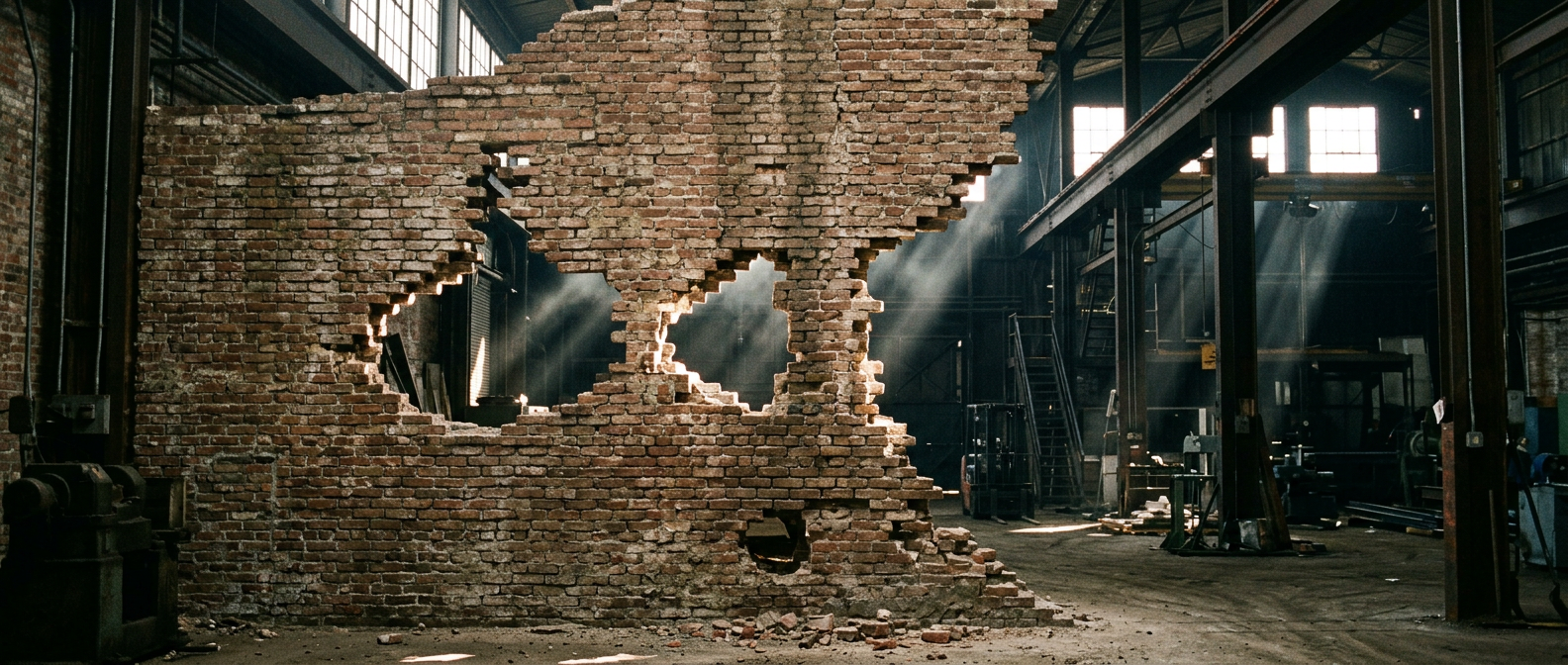
Some bricks come out clean. The wall holds. The redundancy was real and the structure was stronger than it looked. The call was right and the business confirms it.
Some bricks bring sections of the wall down with them. The person you assessed as redundant turns out to have been load-bearing in ways that no interview surfaced and no due diligence document captured. The undocumented process disappears with them. The relationship that looked transferable was not.
This is not a failure of process. It is the honest cost of making decisions before you fully understand what you are deciding about. Due diligence gives you the best possible preparation. It does not give you the thing that only comes from being inside the building when the pressure is real. That knowledge arrives after the decision, not before it. And the gap between what you knew going in and what you learn coming out is where every post-close reckoning lives.
Part Five: The Wall Is Still Standing. Barely.
And then you work with what is left.
The team you kept is already carrying more than they were hired to carry. They are absorbing the uncertainty of their own positions, covering the gaps left by the people who are gone, and holding up sections of the wall that were never designed to rest on them.
They will try. Good people always do. But load-bearing is not the same as capable. The wall looks intact from the outside. Inside, the weight has shifted to places the original structure never anticipated. The stress compounds quietly, and then it doesn't.
This is the post-close reckoning. Not the org chart. Not the synergy realization schedule. The Tuesday morning three months in when something breaks and you start asking questions and all the answers lead back to the same place.
The Takeaway: The Firms That Get This Right
The leadership teams that navigate this well are not the ones who make every cut correctly. Nobody does. The variables are too many, the information too incomplete, and the conditions too compressed for any process, however rigorous, to be perfect.
The ones who get it right are the ones who know that going in. They do the due diligence because it is genuinely useful. They take the months of preparation seriously. And they hold those conclusions loosely enough to hear what the business tells them in the weeks after the decision lands.
They also bring someone into the room who has done this before. Not because that person is infallible. Because they have pulled enough bricks out of enough walls to know which ones to test carefully and which sections of the wall to leave alone until they understand what is holding it up.
Due diligence gives you the best possible preparation for a decision you cannot fully make until you make it. The conversation that happens before the bricks come out determines how much of the wall you have left when the reckoning arrives.

Luciano Global Ventures Inc. | Interim and Transitional Executive Leadership | lucianogv.com
This article appears in TGVR Issue No. 04, May 2026 — The Global Ventures Review, published monthly by Luciano Global Ventures Inc.